In an interview with Business Today Egypt on the sidelines of She Can, Hayes said the evolution of women-led entrepreneurship in Egypt mirrors global trends, with clear momentum despite persistent structural challenges.
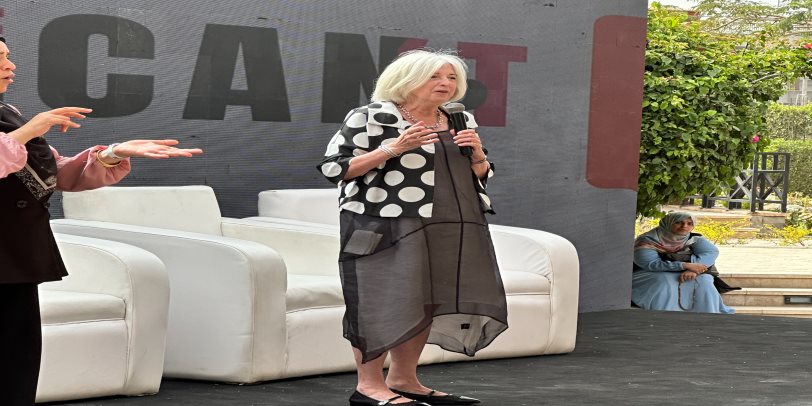 Angel Investor Nancy Hayes
Egypt’s startup ecosystem is making tangible progress in supporting women entrepreneurs, but gaps in funding access and investor networks continue to limit growth, according to angel investor Nancy Hayes.
In an interview with Business Today Egypt on the sidelines of She Can, where she was a featured speaker in collaboration with the U.S. Embassy, Hayes said the evolution of women-led entrepreneurship in Egypt mirrors global trends, with clear momentum despite persistent structural challenges.
She Can is one of the leading events in the Middle East and North Africa supporting women entrepreneurs in fields such as artificial intelligence, marketing, and fashion. It aims to empower women through learning, networking, and creating opportunities for growth.
“We are seeing real change… in Egypt as well as in many other places around the world,” she said, noting that while ecosystems vary in maturity, the underlying dynamics are largely consistent. “There may be differences in language or culture, but the core is the same.”
Untapped investment opportunity
Hayes argued that investors are consistently overlooking high-potential opportunities by failing to back women-led ventures.
“All investors everywhere are missing out on good returns from not investing in women,” she said, attributing this not only to cultural bias but also to limited exposure. In many cases, investors have not been introduced to women founders in ways that clearly demonstrate the commercial upside.
Access remains the core barrier
A central challenge, according to Hayes, is access to investor networks. Women entrepreneurs often struggle to connect with investors, particularly in ecosystems where networks are male-dominated.
“They don’t have the networks… and they need advocates,” she said, pointing to organizations such as Entreprenelle as playing a critical role in bridging that gap.
Beyond access, Hayes highlighted the importance of communication. Founders must be able to clearly articulate their business case in financial terms.
“They need to learn how to tell their story so an investor sees how they can make money,” she said.
Rethinking risk
Hayes also challenged common perceptions about female founders, particularly the notion that women are more risk-averse.
“Women are not risk-averse, they are risk-aware,” she said, explaining that women entrepreneurs tend to assess and plan for risk carefully, leading to more deliberate decision-making.
A consistent global pattern
Drawing on more than a decade of experience working with entrepreneurs, Hayes emphasized that the barriers facing women founders are remarkably similar across markets.
At the same time, she underscored that the drive to innovate remains strong. “We have talented people who see a change they want to make in the world… and they’re going to make it happen,” she said.
Data underscores the gap
In her remarks at She Can in collaboration with the U.S. Embassy, Hayes added that women are already a significant force in business creation, citing data from her experience in the U.S. showing they account for roughly 40% of all new businesses. Despite that scale, access to capital has not kept pace.
Hayes emphasized that the funding gap persists even as women-led ventures demonstrate stronger financial outcomes. Referencing industry analysis, she said companies with at least one woman on the founding team outperform all-male teams by 63%, highlighting a consistent performance edge.
She also pointed to return-on-investment metrics, noting that women-led businesses generate about 78 cents per dollar invested, compared to 31 cents for male-founded companies, figures that underscore what she described as a “missed opportunity” for investors.
Despite these results, Hayes stressed that women founders continue to receive disproportionately low levels of funding, constraining their ability to scale.