The report, spotlighted by Egypt’s Cabinet Information and Decision Support Center, places Egypt in the third position among 18 markets in the Middle East and North Africa (MENA) in terms of investment openness, and 27th globally out of 202 economies, reflecting a significant improvement in its investment climate.

A recent report by global credit rating agency Fitch Ratings, titled “Analyzing Egypt’s Investment Openness”, highlights the growing strength of Egypt as a key destination for foreign direct investment (FDI), underscoring its expanding role across regional and global investment markets.
The report, spotlighted by Egypt’s Cabinet Information and Decision Support Center, places Egypt in the third position among 18 markets in the Middle East and North Africa (MENA) in terms of investment openness, and 27th globally out of 202 economies, reflecting a significant improvement in its investment climate.
According to Fitch, FDI into Egypt is increasingly diversified across high-value sectors, including oil and gas, automotive manufacturing, information and communications technology (ICT), food processing, renewable energy, infrastructure, and financial services. This diversification reflects Egypt’s ongoing transition toward a more resilient and broad-based investment economy.
The report notes that Egypt’s attractiveness is reinforced by its strategic geographic location linking Africa, the Middle East, and Europe, alongside its large domestic market, competitive labor costs, skilled workforce, and substantial energy reserves.
Fitch attributes the growing inflow of foreign investment to several structural and policy-related factors. These include sustained economic dynamism, ongoing regulatory reforms, and Egypt’s success in attracting financing from Gulf markets.
The report also emphasizes recommendations from the International Monetary Fund suggesting that a more flexible exchange rate regime could further strengthen FDI inflows by improving foreign currency availability and enhancing investor confidence in the short to medium term.
Egypt has set a strategic goal of attracting around $60 billion in FDI between 2026 and 2030, a target Fitch describes as achievable given historical performance. The country typically attracts between $9–11 billion annually, excluding large-scale exceptional projects.
Fitch notes that compared to global benchmarks, Africa as a continent often attracts less than $60 billion annually in total FDI, underscoring the scale of Egypt’s ambition.
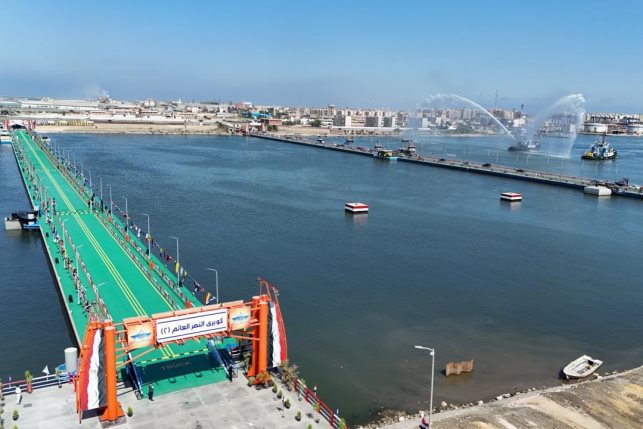
A key pillar of Egypt’s investment strategy is the expansion of infrastructure and the development of specialized economic zones. The report highlights the growing role of the Suez Canal Economic Zone as a strategic hub for logistics, manufacturing, and trade-linked industries.
Foreign investors, particularly multinational corporations in the automotive, pharmaceutical, and electronics sectors, continue to expand their presence in Egypt, supported by streamlined investment procedures introduced in recent years.
A major reform milestone was the introduction of the “golden license” system in 2022, which allows investors to obtain a unified approval for establishing and operating projects within a short timeframe, significantly reducing bureaucratic procedures.
Fitch highlights Egypt’s accelerating shift toward green investment, noting that the government plans to ensure that all new public investments become green by 2030. The country has also advanced its renewable energy targets, aiming to generate 42% of electricity from renewable sources by 2030, five years ahead of the original schedule.
Priority sectors include solar and wind energy, green hydrogen, desalination, sustainable transport, electric vehicles, smart cities, and sustainable construction materials.
The report also points to Egypt’s growing role in green hydrogen and clean energy investments, supported by policy reforms dating back to 2014 that opened the energy sector to private participation.
Belt and Road and Gulf Investment Momentum
International investment flows are also being supported by major geopolitical and infrastructure initiatives. China has announced plans under the Belt and Road Initiative to invest heavily in projects across participating countries, including Egypt, particularly in logistics corridors and maritime infrastructure linked to the Suez Canal region.
At the same time, Gulf investment continues to expand, reinforcing Egypt’s integration into regional capital markets and development strategies. Major source countries of FDI include the United Arab Emirates, Saudi Arabia, Kuwait, the United States, the United Kingdom, Italy, and other European Union member states.
Legal and Regulatory Framework Strengthening Investor Confidence
Egypt’s investment climate has been significantly shaped by its investment law framework. The Investment Law No. 72 of 2017 introduced wide-ranging incentives, including tax reductions, streamlined “one-stop shop” services, land allocation incentives, and guarantees for profit repatriation and foreign investor rights.
The report also highlights special provisions for technology zones, which support industries such as software development, data centers, electronics design, and outsourcing services, offering tax exemptions and customs advantages.
Additionally, amendments introduced in 2023 expanded investment incentives and improved flexibility for both new and existing projects, reinforcing Egypt’s efforts to ensure more balanced regional investment distribution.
Strong Position in Global Capital Flows
According to Fitch, Egypt continues to maintain one of the strongest FDI stock positions in North Africa and ranks third in MENA after Saudi Arabia and United Arab Emirates.
Major multinational corporations, including BP and Shell, continue to play a significant role in Egypt’s energy sector, contributing to long-term investment stability.
In terms of accumulated investment stock, the United Kingdom remains one of the largest investors, followed by Belgium, the United States, and the UAE, according to data referenced from Lloyds Banking Group.
Fitch concludes that Egypt is steadily consolidating its position as a regional gateway for trade, energy, and industrial investment, supported by its strategic location, reform momentum, and expanding infrastructure base.
With continued policy reforms, green transition initiatives, and integration into global supply chains, Egypt is expected to remain one of the most dynamic investment destinations in the MENA region over the coming decade.