The move is part of broader measures to strengthen fiscal stability and achieve a primary surplus of 5% of GDP by the 2026/2027 fiscal year.

The International Monetary Fund (IMF) confirmed in its fifth and sixth reviews of the Egyptian economy that the government plans to reduce debts owed by government entities to the Ministry of Finance by approximately EGP 100 billion annually, aiming to fully settle these obligations by 2029.
The move is part of broader measures to strengthen fiscal stability and achieve a primary surplus of 5% of GDP by the 2026/2027 fiscal year.
In support of public finances, the report noted that Egypt has improved central bank management by transferring deposits of economic authorities to the government treasury account. This step reduces claims on the central bank and enhances the effectiveness of monetary policy.
The government also committed not to expand lending to public entities, except for the Ministry of Finance, in an effort to improve transparency and ensure the sustainability of monetary policy.
The IMF indicated that the recent increase in fuel prices reduced fuel subsidies by about LE 97 billion during 2025/2026, equivalent to roughly 0.5% of GDP.
The government also plans to resume the automatic fuel price adjustment mechanism by the end of the second quarter of 2026, reinforcing its commitment to subsidy reform.
In addition, the report highlighted the government’s intention to tighten tax policies through a new reform package that includes removing selected VAT exemptions and introducing taxes on transfer pricing and distributable profits of state-owned companies.
These measures aim to increase tax revenues by about 2% of GDP during the period from 2024/2025 to 2026/2027, with the reforms expected to be incorporated into the 2026/2027 state budget and approved by Parliament by the end of June 2026.
The IMF projected that Egypt’s economy will grow by 4.7% in 2025/2026, rising to 5.7% by 2027/2028 as reforms continue to support economic activity.
However, growth could slow to 4.8% by 2029/2030 if deeper structural reforms are not implemented.
The report also indicated that Egypt’s financing needs are expected to remain relatively high at around 40% of GDP over the next three years, while the current account deficit is projected to decline to 3.8% in 2025/2026 before stabilizing near 3% in the medium term, supported by stronger non-oil exports, the gradual recovery of Suez Canal revenues, and increased energy production.
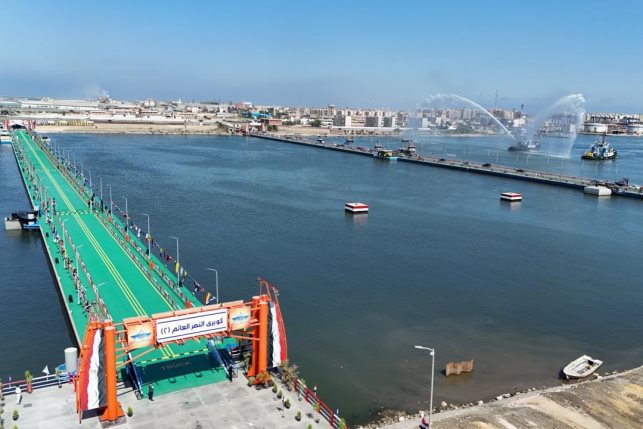
According to the IMF, revenues from the Suez Canal are expected to reach approximately $6 billion in 2025/2026, compared with about $4.2 billion in the current fiscal year, with continued recovery projected to push revenues to around $9.5 billion by 2030/2031.
The report also estimated that oil and gas exports will reach about $3.8 billion in 2025/2026, while imports are projected to rise to $17.2 billion during the same fiscal year and gradually increase to $22.7 billion by 2030/2031.
The government has secured confirmed financing commitments from development partners worth $4.4 billion in 2025/2026 and $2.5 billion in 2026/2027, in addition to $18.3 billion in Gulf deposits at the Central Bank that will remain in place until the IMF program concludes in December 2026, with foreign currency proceeds maintained within official reserves.
The IMF indicated that its outstanding credit to Egypt is expected to reach 9.17 billion Special Drawing Rights (SDRs) by the end of the program in December 2026, representing a decline of about one-third compared with the level at the start of the program.
Special Drawing Rights are an international reserve asset used to strengthen global liquidity and facilitate financial transactions between member countries, and they can be converted into major currencies such as the US dollar or euro when needed.
The report expects peak debt service obligations to reach 4.8% of goods exports and 5.8% of international reserves during 2025/2026, while warning of risks that include commodity price shocks, elevated trade deficits, and potential capital outflows.
Looking ahead, the IMF projected that net foreign direct investment in Egypt will reach $13.5 billion in 2026/2027, rising gradually to $18.4 billion by 2030/2031.
Tourism revenues are also expected to increase to $21.1 billion in 2026/2027 and reach approximately $28.7 billion by 2030/2031, reflecting a gradual recovery in the sector following recent regional disruptions and the pandemic.
The report concluded that the government will continue implementing an active debt management strategy aimed at reducing debt levels and debt servicing costs, lowering total financing needs, and strengthening fiscal sustainability.
These measures include rescheduling domestic debt, issuing longer-term debt instruments such as bonds and sukuk, and using proceeds from investment deals and future privatization revenues to reduce short-term debt. The strategy is expected to reduce total financing needs by about 6% of GDP in 2025/2026 and by an additional 4% of GDP in 2026/2027.
The IMF also supports extending Egypt’s economic reform program until 15 December 2026, bringing the total program duration to 48 months while ensuring the implementation of key reforms and maintaining full program financing.