The report showed that program completion surged to 244.8 % of its original target once the deal was factored in, signaling that the initiative has surpassed its goals for attracting foreign direct investment.

The third progress report on Egypt’s State Ownership Policy Document revealed a dramatic shift in the performance of the government’s privatization program, fueled by the landmark Ras El Hekma deal signed with Abu Dhabi–based ADQ.
The report showed that program completion surged to 244.8 % of its original target once the deal was factored in, signaling that the initiative has surpassed its goals for attracting foreign direct investment.
Between March 2022 and June 2025, total proceeds reached $5.86 billion. Excluding the Ras El Hekma transaction, however, the achievement rate stands at 48 percent of the $12.2 billion target, highlighting the pivotal role the deal played in accelerating progress.
The document emphasized that the State Ownership Policy aims to raise the private sector’s contribution to the economy to 65 % by FY2025/2026.
To provide clarity for investors, the government issued a list of 35 companies targeted for divestment, after adding Eastern Company, Ezz Dekheila Steel, and Telecom Egypt to the initial roster.
A centralized privatization unit was created under the Cabinet to oversee implementation directly, including the selection of investment banks and legal advisors and the design of marketing strategies for each offering.
In June 2023, the International Finance Corporation was brought on board to provide technical support and help draft an integrated execution strategy.
The program was divided into four phases spanning the period from March 2022 to June 2025.
The first two phases delivered nearly full results, raising more than $5 billion through divestments that included partnerships with ADQ and Saudi Arabia’s Public Investment Fund, as well as sales of stakes in companies such as Pachin, Ezz Dekheila Steel, Ethydco, and Elab.
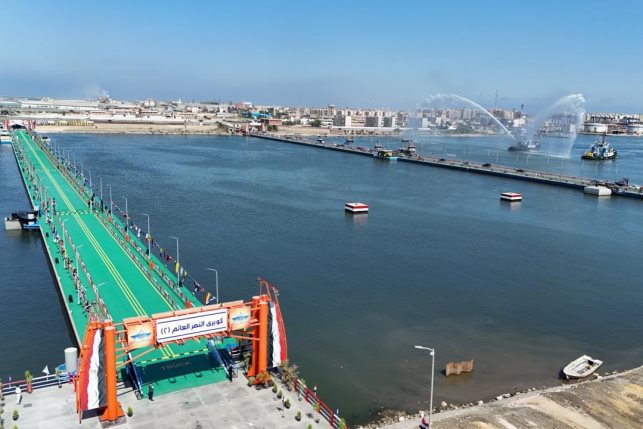
The third phase, which was the most ambitious and aimed to raise $5 billion from strategic assets such as the Gabal El Zeit wind farm and container terminals in Damietta and Port Said, was hindered by global market volatility and foreign exchange challenges, resulting in just $625 million in proceeds.
The ongoing fourth phase, scheduled to conclude in June 2025, targets $1.9 billion from strategic holdings across industries including energy, food, pharmaceuticals, and logistics.
So far, it has generated $142 million, with further transactions expected in the first half of 2025 as advisors are appointed and offerings advance.
Egypt’s capital market has grown significantly in depth and scale, with average market capitalization reaching EGP 1.95 trillion in 2023 and 2024, compared with EGP 662.7 billion over the previous decade.
As a share of GDP, capitalization rose to 16.3 %, up from 12.3 % in 2022, approaching historic highs.
Looking forward, the government reiterated its commitment to completing the program as a cornerstone of economic reform, aiming to raise total investment rates to between 25 and 30 % and achieve medium-term GDP growth of 7 to 9 %.
The next phase will focus on high-potential sectors such as renewable energy, logistics, food industries, and financial technology.
The report concluded by pointing to strong investor demand in previous transactions, most notably the United Bank offering, which was oversubscribed 59 times, as an indication of the market’s appetite for Egypt’s privatization agenda.