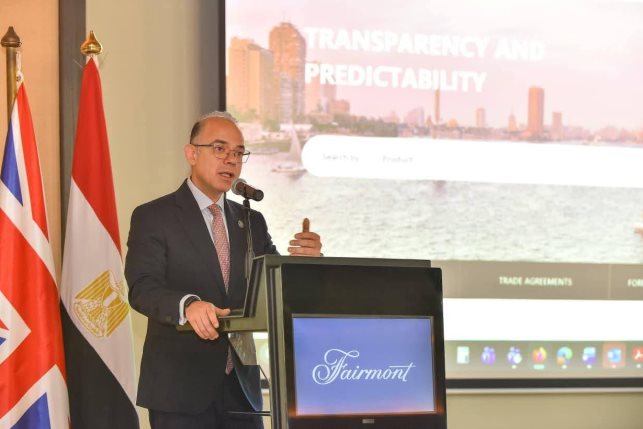
This surge has positioned Egypt among the top seven countries globally in terms of remittance receipts explained Hassan El-Khatib

Egypt’s remittance inflows saw a significant increase of 45.3% in the first ten months of 2024, reaching approximately $23.7 billion, up from $16.3 billion during the same period in 2023.
This surge has positioned Egypt among the top seven countries globally in terms of remittance receipts explained Hassan El-Khatib, Minister of Investment and Foreign Trade, underscoring the significant role Egyptians working abroad play in the nation's economy.
El-Khatib stressed that Egyptians abroad contribute not only to the economies of the countries they work in but also play a pivotal role in strengthening Egypt’s economic position through remittances. He noted that the total remittances from Egyptians abroad in the 2020/2021 and 2021/2022 fiscal years reached around $32 billion annually.
The minister attributed much of the recent growth in remittances to the country’s reform measures, particularly those implemented in March 2024, which helped address challenges faced in the previous year related to exchange rates.
El-Khatib emphasized that the outlook for Egypt's remittance growth remains strong, with the potential to double in the coming years, given the country’s qualified, globally competitive workforce.
As of now, more than 5 million Egyptians are working abroad, primarily in the Gulf region, contributing not just through remittances but also enhancing Egypt's standing on the global stage.
El-Khatib, who participated in the launch of the CIRA Care initiative on Sunday, also spoke to the importance of investing in human capital, which he described as the foundation of any successful economic and social development. He highlighted Egypt's vast pool of skilled human resources, estimating that approximately 31 million Egyptians are part of the country’s workforce—young, educated, and ambitious.
Egypt's competitive wages, which are attractive to international investors, position the country as a prime market for high productivity at a cost-effective rate. El-Khatib stressed that human capital is the true wealth that Egypt must continue to invest in, echoing his belief that those countries which prioritize such investments achieve unparalleled development.
Looking ahead, Egypt’s 2024/2025 economic and social development plan places a significant focus on human and social development, with 42% of government investments allocated to this sector.
The country also has ambitious targets set for 2027, including reducing the unemployment rate to 6.5%, improving technical and technological education to meet international needs, and expanding vocational training programs. The goal is to increase the number of technical schools to 1,243 and applied technology schools to 100.